Upcoming Classes & Workshops
Click on class titles for more infoRmation and To register. NYAA CE Online Classes are open to all Adults.

Monday Evenings from 6:30-9:30PM Est
Fall Session 1 - September 2026
This class will focus on painting flowers and other botanicals in their natural environment using “direct” painting techniques: mixing our colors carefully and applying the paint with expressive, impasto brushstrokes. During the six classes, Elody Gyekis will discuss color theory, how to create depth and space in a landscape, how to compositionally balance finer detail versus working loosely, and how to work on top of colored grounds and under-paintings.
For inspiration, we will look at the history and development of direct painting in art history, Impressionistic paintings, and various talented contemporary artists.
Students may work in oil or acrylic paint.
ANIMAL DRAWING I: Creative Approaches and Techniques
Tuesday Afternoons from 2-5 PM Est
Fall Session 1 - September 2026
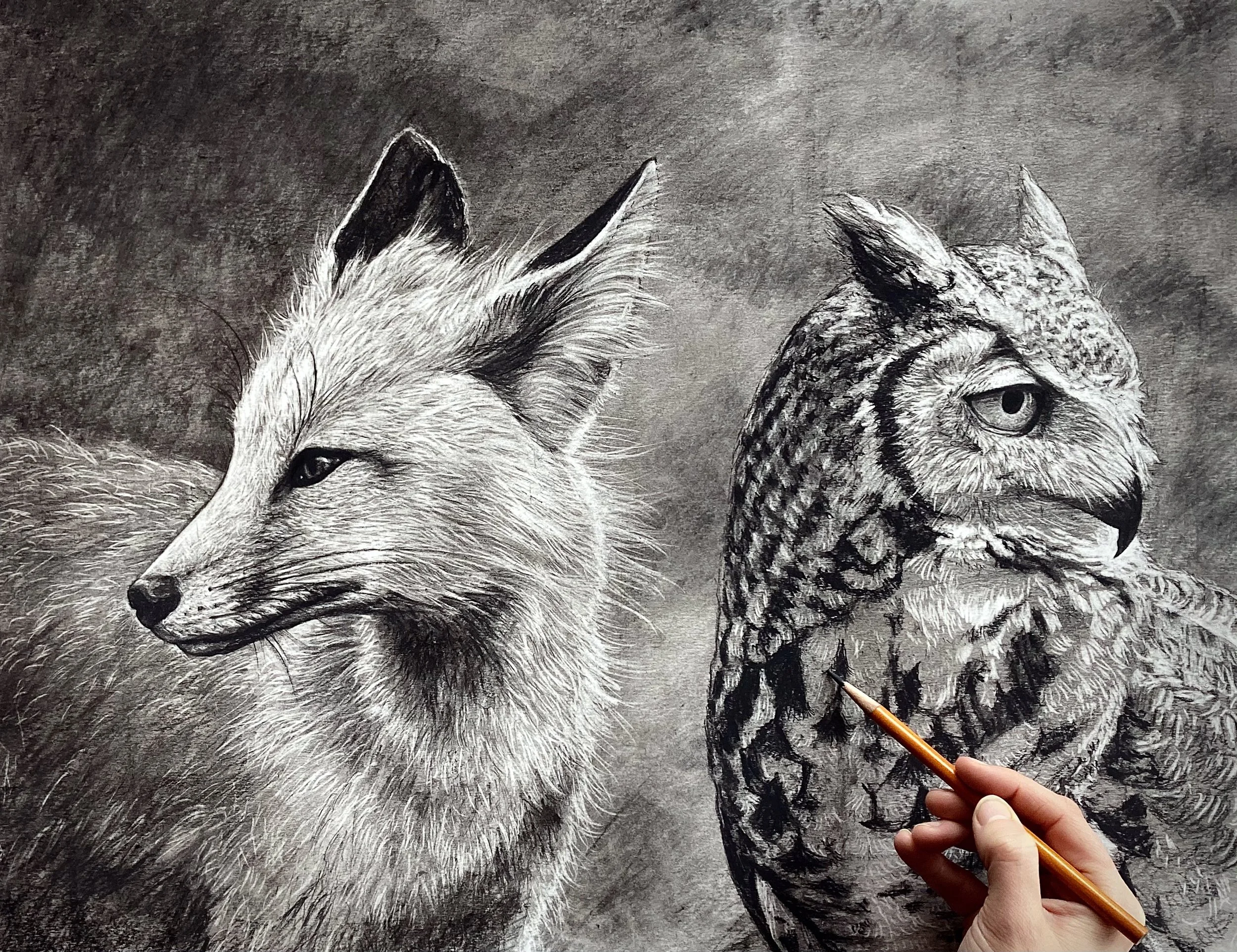
In Animal Drawing I, students will learn various strategies to translate what they see onto paper accurately and explore the subtlety and depth of charcoal and graphite. Through demonstrations, lectures, and individualized feedback, Elody will cover gestural techniques exploring motion, posture, and proportion, the skeletal structures of vertebrate animals, and refined drawing methods to capture the surface textures found in the animal kingdom. Elody will teach additive and subtractive drawing techniques, and working quickly versus building up a longer drawing up over time. Additionally, students will learn about drawing from life versus photographic references, methods of translating what you see onto a two-dimensional surface, and how to capture facial expressions in an animal portrait. For an optional final project, we will explore strategies for integrating animals into invented scenes with other animals, humans, or landscapes using light to unify the composition. Throughout the class we will look historical art depicting animals from ancient, medieval and renaissance periods.
Landscapes & light I: Atmosphere, Sunlight & Color Theory
Wednesday Afternoons from 2-5 PM Est
Fall Session 1 - September 2026
Learn everything you need to know about color theory in nature.
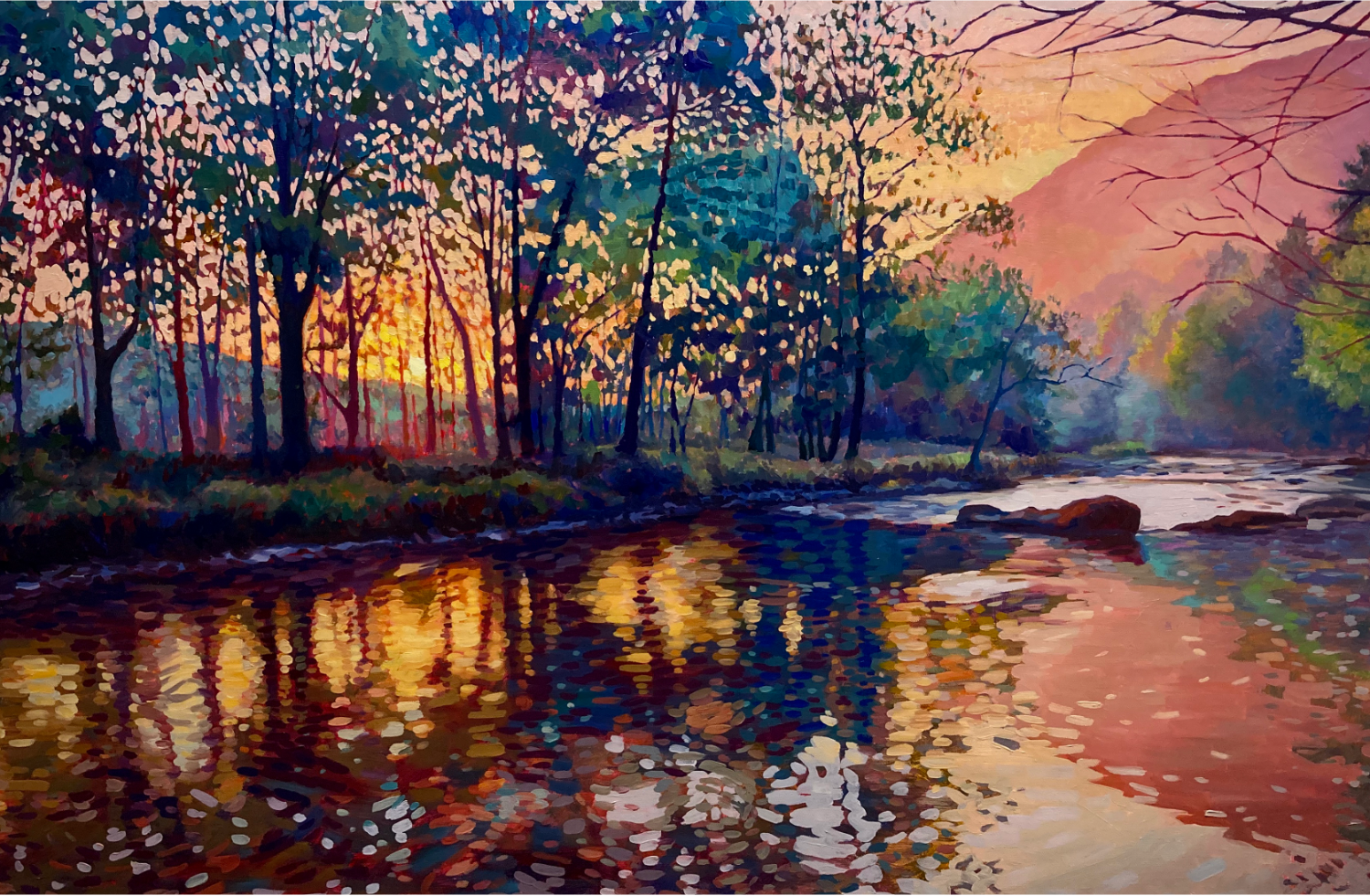
Over the course of six weeks, this class will focus on landscape painting, with concepts that can be applied to any subject painted in natural light. To build a true understanding of color and light, the course begins with the fundamental science that shapes them on Earth. Students will explore how sunlight interacts with the atmosphere, why the sky appears blue, and how that blue shifts under different conditions. The curriculum also examines how the color and quality of sunlight change throughout the day and under varying levels of humidity or pollution, as well as how the sky acts as a secondary light source within shadows. Atmospheric perspective, its structure, variations, and uses, will be broken down in depth. All of this knowledge culminates in learning to create landscapes filled with convincing light, space, and mood. The course includes lectures, discussions, small studies from provided references, and larger paintings based on references of your choice. Open to beginner through advanced painters working in any full-color, layer-friendly medium, such as oils, acrylics, or combinations of watercolor, gouache, and pastels. All demonstrations will be done in oil paint. Please email cs@nyaa.edu for registration questions.
Future CLasses

BOTANICALS II: INDIRECT APPROACHES TO PAINTING NATURE
Monday Evenings from 6:30-9:30PM Est
Spring Session II 2024
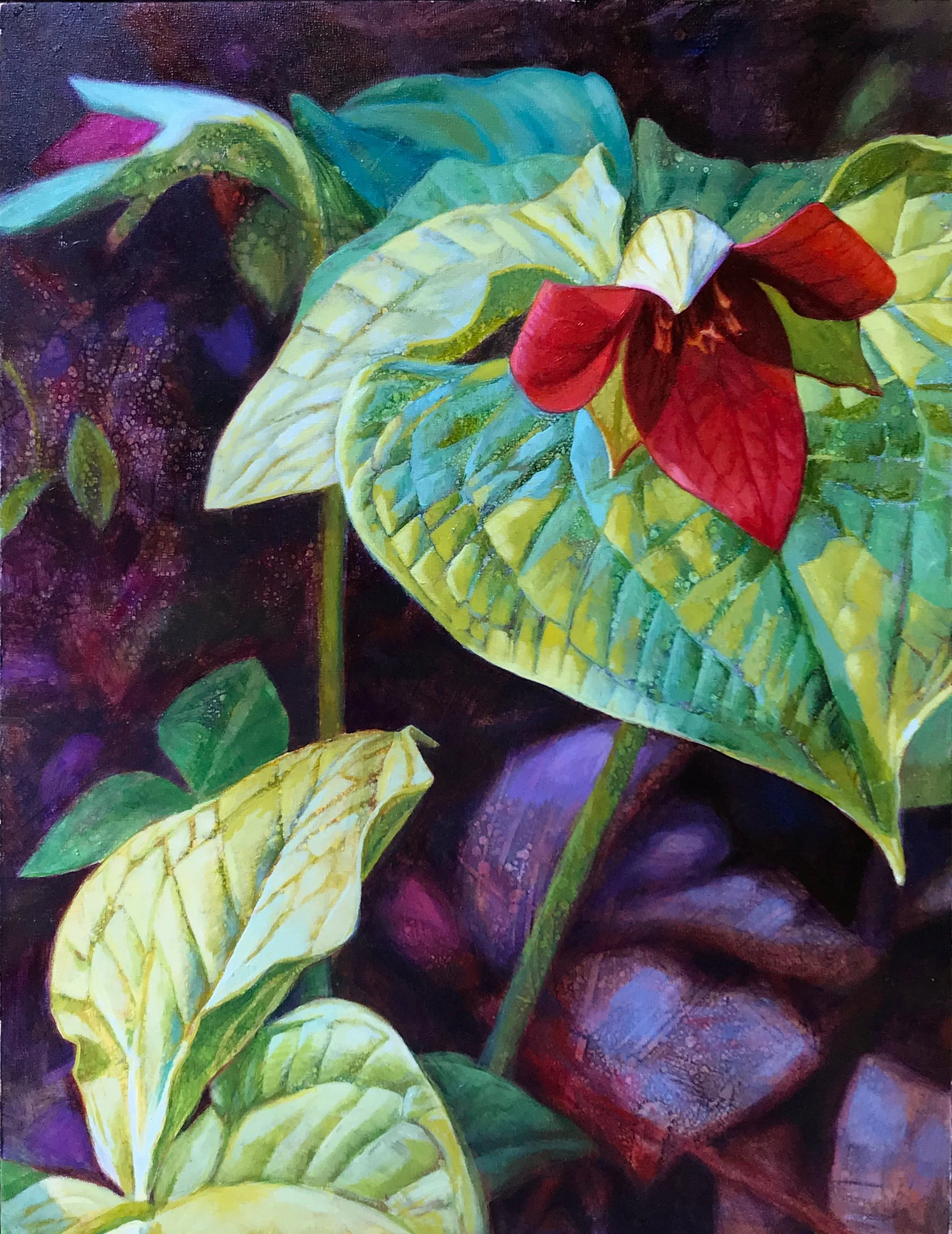
This class will focus on painting flowers and other botanicals up-close in all their detailed glory. Botanical subjects give a painter every possible challenge to work with: color, pattern, transparency, volume, and texture. In this class, Elody Gyekis will show you how to approach these complexities using the “Indirect” painting process: building up your painting by working in multiple transparent layers. These historical painting techniques allow the artist to focus on one problem at a time. We establish our drawing, value structure, temperature, surface colors and details all in separate stages. The final result will be luminous and highly refined. We will also learn about oils and mediums, how to prepare grounds on canvas and panel, and how to prepare your references.
Oil paints are highly recommended for this class, but acrylics can be used instead if preferred. *Botanical Painting I is NOT required to sign up for this class. Botanical Painting I and Botanical Painting II contain separate methods and can be taken independently.
ANIMAL DRAWING II: EXPLORING MATERIALS
Tuesday Afternoons from 2-5 PM Est
Fall Session II 2024
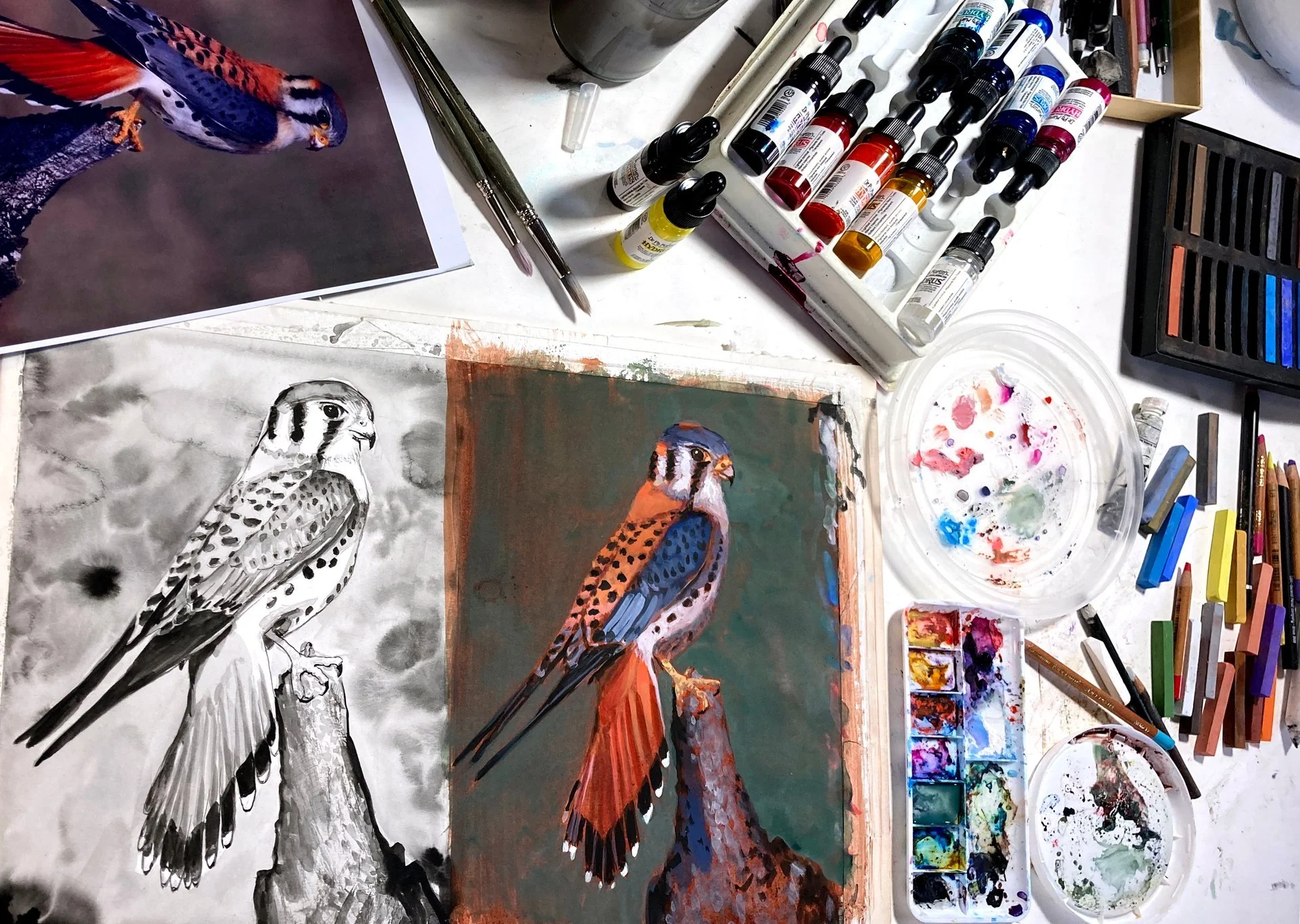
In Animal Drawing II, students will explore white and black charcoal on toned paper, ink, watercolor, and mixed-media layering. The class will build upon the gesture drawing and drawing strategies learned in Animal Drawing 1, focusing primarily on techniques for other drawing media and exploring the various surface textures and expressions found in the animal kingdom. We will also look at various artists' approaches to depicting animals throughout art history, focusing on pre-modern, modern, and contemporary artists. (Animal Drawing I is not required to take Animal Drawing II.)
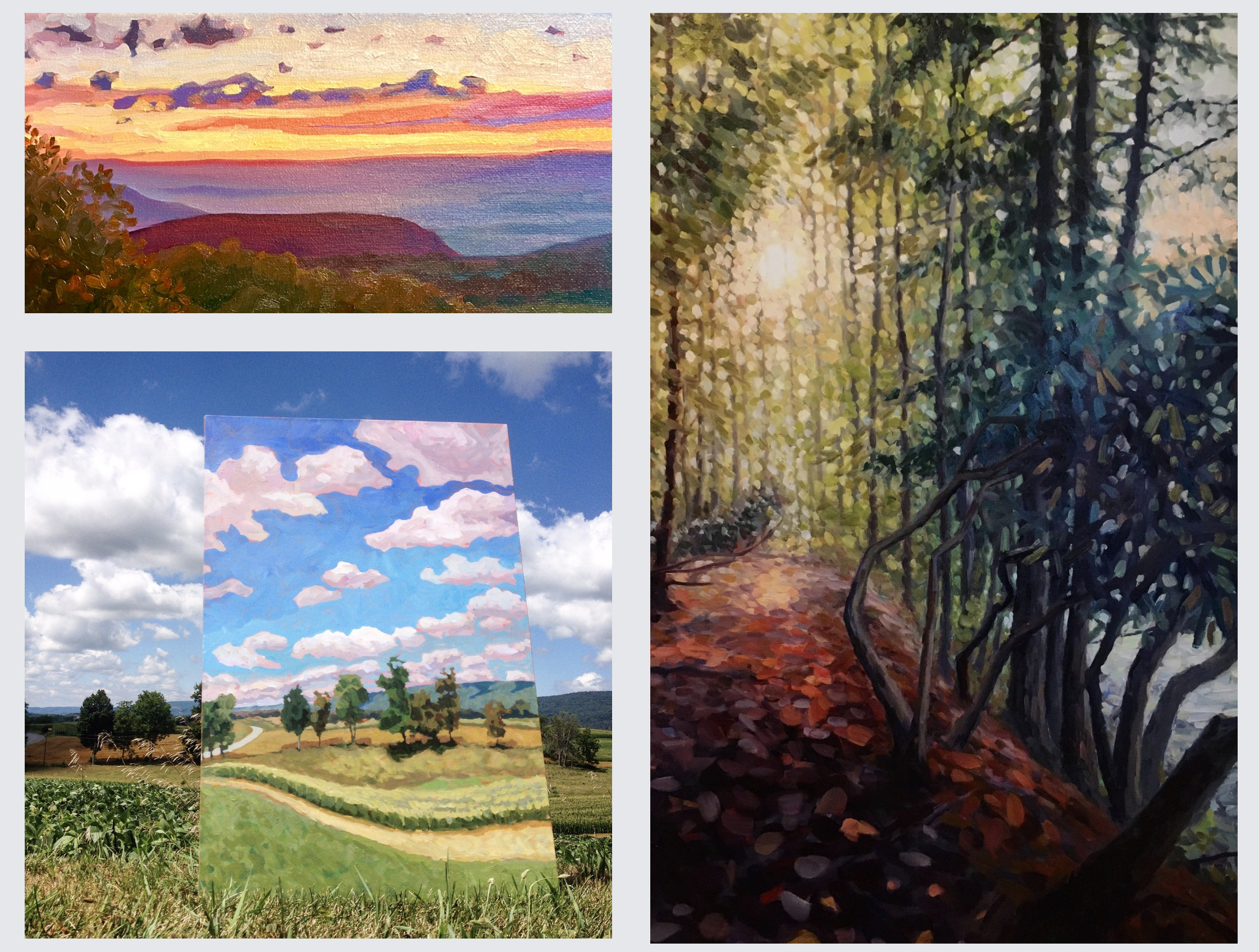
Landscapes & light II: CLouds, FOrests, and Water
Seeing the Light: An artists’ guide to the science of color
online weekend workshop Dates TBD
This weekend workshop will be a deep dive into advanced color theory for artists who want to know not just how color behaves in our world, but why.
Why is the sky blue? Learn how to mix the right kind of blues for different sky tones. Why is evening sunlight golden? Learn how to paint the golden light that bathes the landscape just before dusk. Why does the green of a leaf change if the sunlight is shining through from behind instead of reflecting off the top of the leaf? Learn how to create that sense of glowing with paint. We will go over each of these phenomena, and each why will lead to a how that empowers us to depict the natural world in all of its vitality and luminosity. Each core concept will begin with a lecture and discussion and then turn toward practical application of the concept. Using demonstrations and small color studies to illustrate each concept, participants will come away with a new perspective on color observation, application, and invention. This workshop is open to any medium with a full-color range including oils, acrylics, gouache, watercolors, and pastels.
CREATING IMAGINED COLOR IN PAINTING
Online weekend workshop - TBD
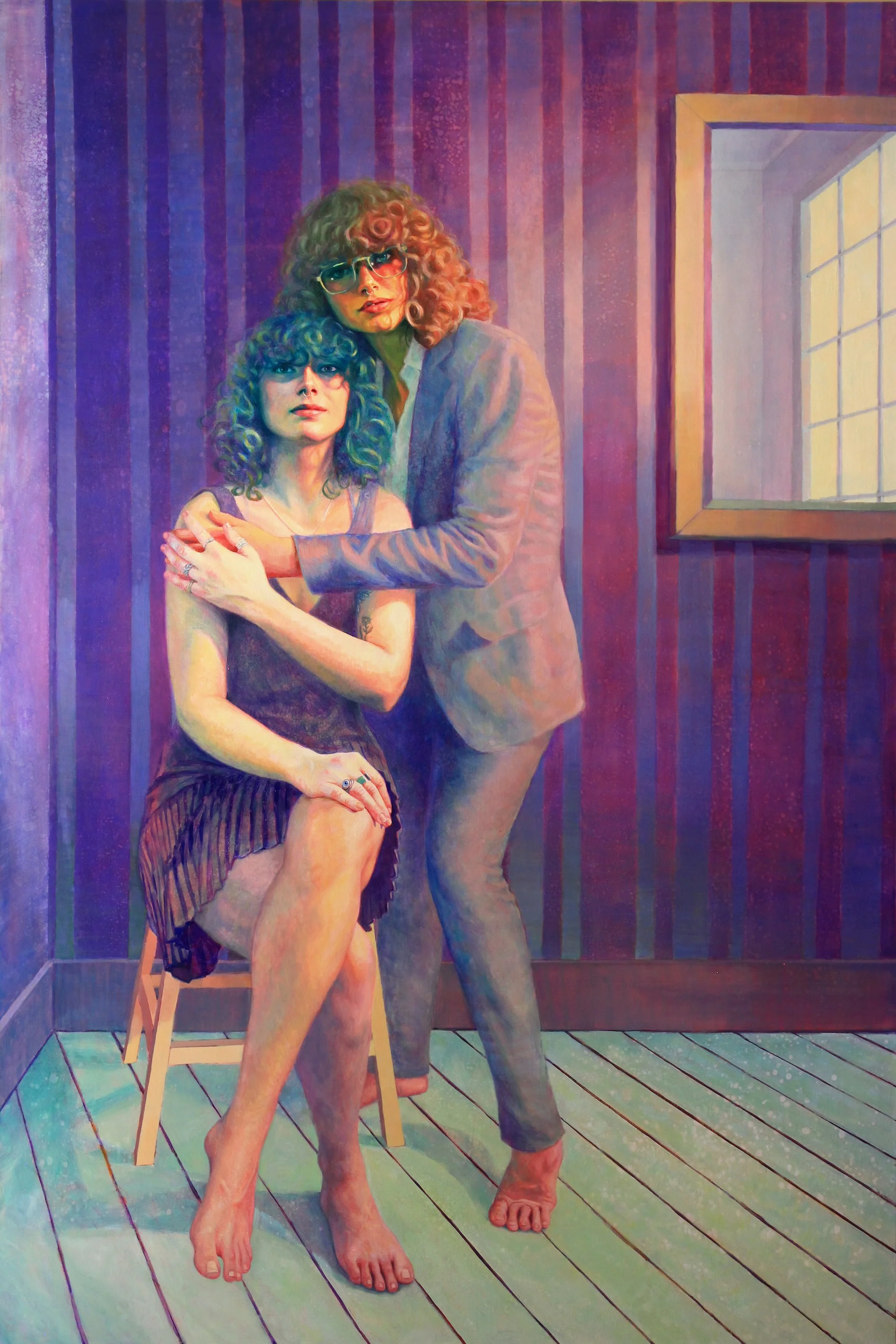
The ability to paint with invented color allows artists to escape copying the photograph, and to instead transform it into an evocative, painterly world. In this workshop with Elody Gyekis students will create a two-layer painting using imagined color schemes.
On day 1, students will create a monochromatic under-painting using their own photo reference (should have directional lighting). Day 1 will also include a look at artists and works of art that use invented color schemes, and discussion about what color contributes to mood and meaning in painting.
On day 2, students will experiment with different color schemes and apply their favorite combination onto their monochromatic under painting. Students will begin a full color painting on top of their under-painting, and learn techniques to utilize their imaginations while choosing colors. Day 2 will also include discussion of the behaviors of color, light, and reflection in nature to help guide decision-making in the creation of a convincing imaginary environment.
The techniques taught in this workshop can also be used in creating convincing works that combine multiple photographic references into a single scene.
ALL THAT GLITTERS IS GOLD LEAF: MIXED MEDIA AND GILDING ON PAPER
online weekend workshop Dates TBD
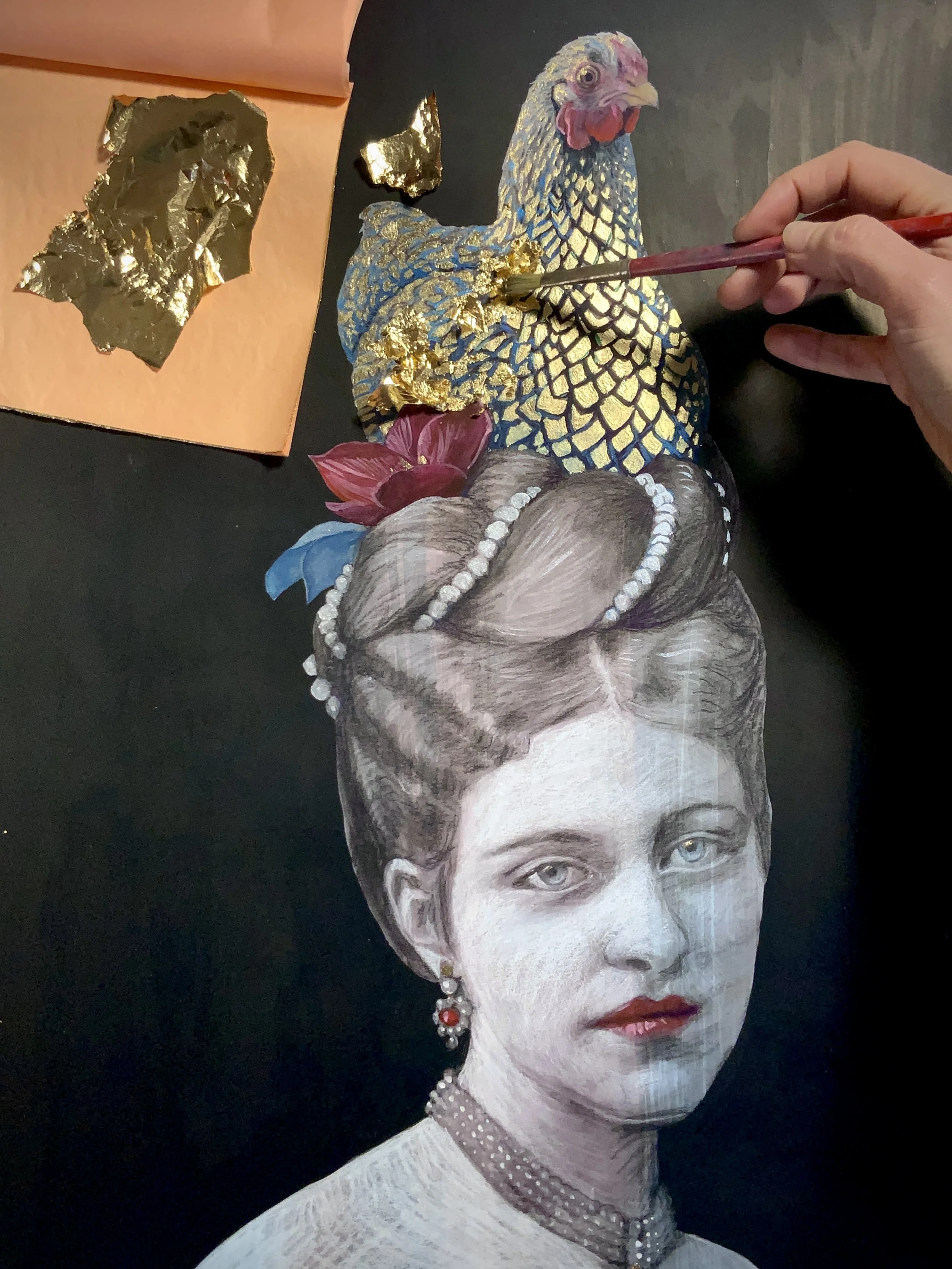
This workshop will be a process-based, playful, and fun weekend of mixed-media drawing experimentation. Students will learn to use wet media on top of dry media and dry on top of wet, layering charcoals, soft pastels, watercolors, and inks. Then learn how to apply gold leaf (or silver leaf, or imitation alternatives) to paper, and explore various approaches for achieving different effects and textures with gilding.
On the first day, students will look at other artists for inspiration, watch a variety of demonstrations, and begin a first layer of at least four different drawings, using a different approach for each. The second day will include more demonstrations, and the addition of further layers and gilding to the drawings. Participants are encouraged to choose a single reference to inspire all of the drawings. Doing multiple iterations of the same image can lower the stakes and encourage freedom of experimentation. The goal of the workshop is to discover a process or combination of media that works well for your artistic sensibilities.
This workshop will be an excuse to finally use those art supplies you
couldn’t resist buying on sale but have not yet used. Some form of dry drawing media (such as charcoals and/or soft pastels) and some form of wet media (watercolors and/or inks), gilding supplies, and heavy paper that can handle layering are all required. Other drawing supplies are also welcome, including iridescent pigments, gouache, colored pencils, markers, pens, paint markers, stamps, acrylic paints, collage supplies, and any other media suitable for use on paper. See detailed supply list for instructions on exactly what to buy if you are new to gilding.
Subscribe to email list at top of page to stay up to date on offerings!